


Feline Heart Disease: The Silent Danger and How to Protect Your Cat
Cats are undisputed masters of the "poker face." In the wild, showing weakness or illness makes a feline vulnerable to predators. Thousands of years of evolution have hardwired our domestic companions to hide discomfort, pain, and even significant illness until they can no longer physically mask the struggle.
At Simply Cats Vet Clinic, we see this most frequently with heart disease. It is often a "silent" condition, progressing quietly in the background while your cat appears perfectly healthy, eating, and grooming as usual. By the time obvious symptoms emerge, the disease is often advanced. Understanding this silent danger is the first step in protecting your cat’s long-term health.
The "Silent" Nature of Feline Heart Disease
Unlike humans, who might report chest pain or shortness of breath, or dogs, who often develop a tell-tale cough when their heart is struggling, cats rarely provide obvious clues. Feline heart disease is often primary, meaning it begins within the heart muscle itself, and because cats spend a large portion of their day resting, they don’t always "test" their cardiac reserve in ways that would make a problem apparent to their owners.
Because we are a cat-only clinic, we focus heavily on the subtle behavioural shifts that might indicate a problem. A cat who used to jump onto the high counter but now settles for the chair, or a cat who sleeps 20 hours a day instead of 16, isn't necessarily just "getting old." These can be the first whispers of a heart that isn't pumping as efficiently as it should.
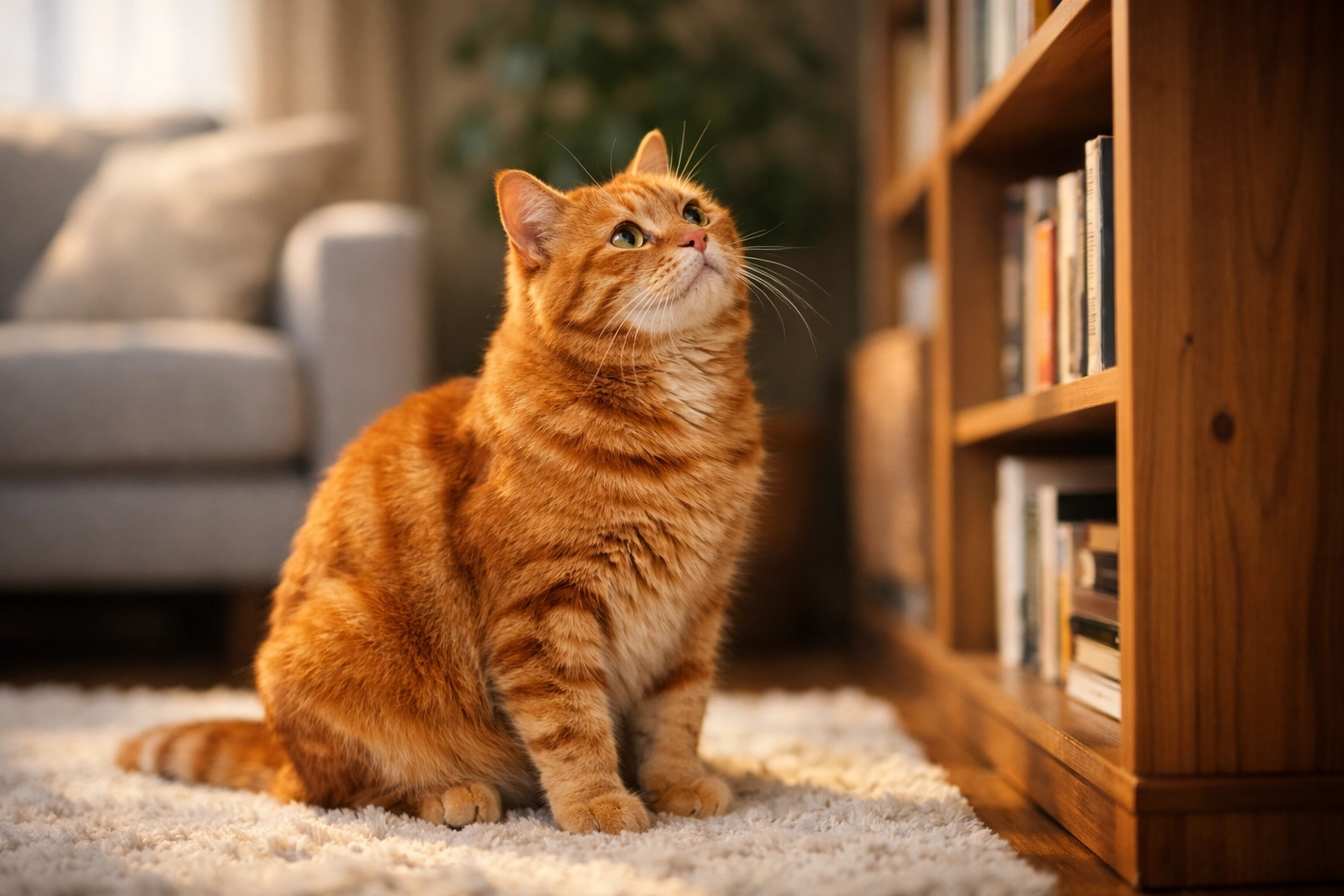
Subtle changes in activity levels are often the only early warning signs owners receive.
Symptoms: What to Look For (And Why You Might See Nothing)
Most feline heart problems are acquired, developing later in life rather than being present at birth. While many cats are asymptomatic in the early stages, as the disease progresses to congestive heart failure (CHF) or other complications, you may notice:
Lethargy: Not just normal napping, but a profound lack of energy.
Reduced Appetite: A sudden or gradual disinterest in their favorite foods.
Rapid Breathing: Taking more than 30–35 breaths per minute while at rest.
Increased Respiratory Effort: Using the abdominal muscles to help pull in air.
Collapse: Sudden fainting spells or weakness.
Sudden Paralysis: Often in the hind limbs, caused by a blood clot (thromboembolism).
It is vital to reiterate that many cats diagnosed with heart disease initially show no signs at all. This is why regular wellness examinations: at least once a year, or twice a year for seniors: are the most powerful tool in your arsenal. During these visits, we can use our cat-friendly clinical environment to get an accurate assessment of your cat's baseline health without the stress caused by barking dogs in a waiting room.
Heart Murmurs: Explaining the "Whoosh"
During a physical exam, one of the most common things we listen for with a stethoscope is a heart murmur. In a healthy heart, the valves close with a distinct "lub-dub" sound. A murmur is an extra "whoosh" sound caused by turbulent blood flow.
It is important to understand that a heart murmur is a finding, not a diagnosis. Murmurs are graded on a scale of 1 to 6 based on their intensity, but the grade doesn't always correlate with the severity of the underlying disease. Some cats have "innocent" murmurs caused by stress or high blood pressure (hypertension), while others have murmurs that signal significant structural changes like Hypertrophic Cardiomyopathy (HCM).
In some cases, a cat may have significant heart disease but no audible murmur. This makes the clinical picture complex and highlights why we look at the "whole cat" rather than just listening to the chest.
The Diagnostic Toolkit: The Gold Standard for Cats
If we detect a murmur, an irregular rhythm (arrhythmia), or if your cat is showing symptoms, we move toward more specific in-house laboratory and diagnostic testing.
1. NT-proBNP Blood Testing
This is a breakthrough in feline cardiology. When the heart muscle is stretched or stressed, it releases a protein called NT-proBNP. A simple blood test can measure these levels. High levels indicate the heart is under significant strain. This is an excellent screening tool, especially for distinguishing between a primary lung issue and a heart issue in a cat having trouble breathing.
2. Echocardiogram (Heart Ultrasound)
The echocardiogram is the gold standard for diagnosing feline heart disease. It allows us to look inside the heart in real-time, measuring the thickness of the walls, the size of the chambers, and the efficiency of the valves. Unlike X-rays, which show the heart's silhouette, an ultrasound shows the internal architecture.
3. Thoracic Radiographs (X-rays)
X-rays are essential for looking at the "big picture." They allow us to see if the heart is enlarged and, crucially, whether there is fluid buildup in the lungs (pulmonary edema) or around the lungs (pleural effusion), which are signs of heart failure.
4. Blood Pressure and Thyroid Screening
In cats, high blood pressure and an overactive thyroid (hyperthyroidism) can actually cause the heart muscle to thicken. We must rule these out to determine if the heart disease is primary or secondary to another treatable condition.

Diagnostic tools like echocardiography allow us to see exactly how the heart muscle is functioning. We do all this at the clinic with a specialist feline cardiologist dialling in the guide the scan, so no stress for your cat going to a referral center etc.
Common Conditions: A Guide to Cardiomyopathy
"Cardiomyopathy" simply means disease of the heart muscle. In cats, there are three main types we encounter:
Hypertrophic Cardiomyopathy (HCM)
HCM is the most common heart disease in cats, affecting approximately one in seven. In this condition, the walls of the left ventricle become abnormally thick. This thickening makes the heart "stiff," meaning it can't relax properly to fill with blood. This leads to a backup of pressure and, eventually, heart failure.
Restrictive Cardiomyopathy (RCM)
In RCM, the heart muscle becomes scarred or fibrotic. It isn't necessarily thick, but it is extremely stiff, preventing the chambers from expanding. The prognosis for RCM is often more guarded than for HCM.
Dilated Cardiomyopathy (DCM)
Once common due to taurine deficiencies in cat food, DCM is now rare thanks to high-quality commercial diets. In DCM, the heart walls become thin and weak, making the heart look like a "soggy balloon" that can't pump blood effectively.
The Risk of Clots (Aortic Thromboembolism)
One of the most devastating complications of feline heart disease is the formation of blood clots within the enlarged chambers of the heart. If a clot breaks loose, it often travels down the aorta and lodges where the artery splits to the back legs. This is known as a "Saddle Thrombus." It is a medical emergency characterized by sudden paralysis, cold back paws, and extreme pain.
Living with Heart Disease: At-Home Care
A diagnosis of heart disease is scary, but it is not a death sentence. Many cats live high-quality lives for years with the right management.
Monitoring Respiratory Rates
The most important thing you can do at home is monitor your cat’s "Resting Respiratory Rate" (RRR). When your cat is fast asleep or deeply relaxed, count how many breaths they take in 60 seconds (one rise and fall of the chest equals one breath).
Normal: 15–30 breaths per minute.
Concerning: Consistently over 35 breaths per minute. If you notice the rate creeping up, it’s time to call us. Catching fluid buildup early can prevent a respiratory crisis.
Stress-Free Medication
Heart medications work best when they are given consistently, but we know pilling a cat can be stressful. To keep the "SimplyCats" ethos at home, try using Churu or other lickable treats to hide medications. Some heart medications can even be compounded into flavored liquids or transdermal gels that are applied to the ear.
Genetic Screening
For certain breeds like the Maine Coon, Ragdoll, and Sphynx, there is a known genetic link to HCM. If you are considering one of these breeds, ask the breeder for genetic clearance, or talk to us about screening your cat early.
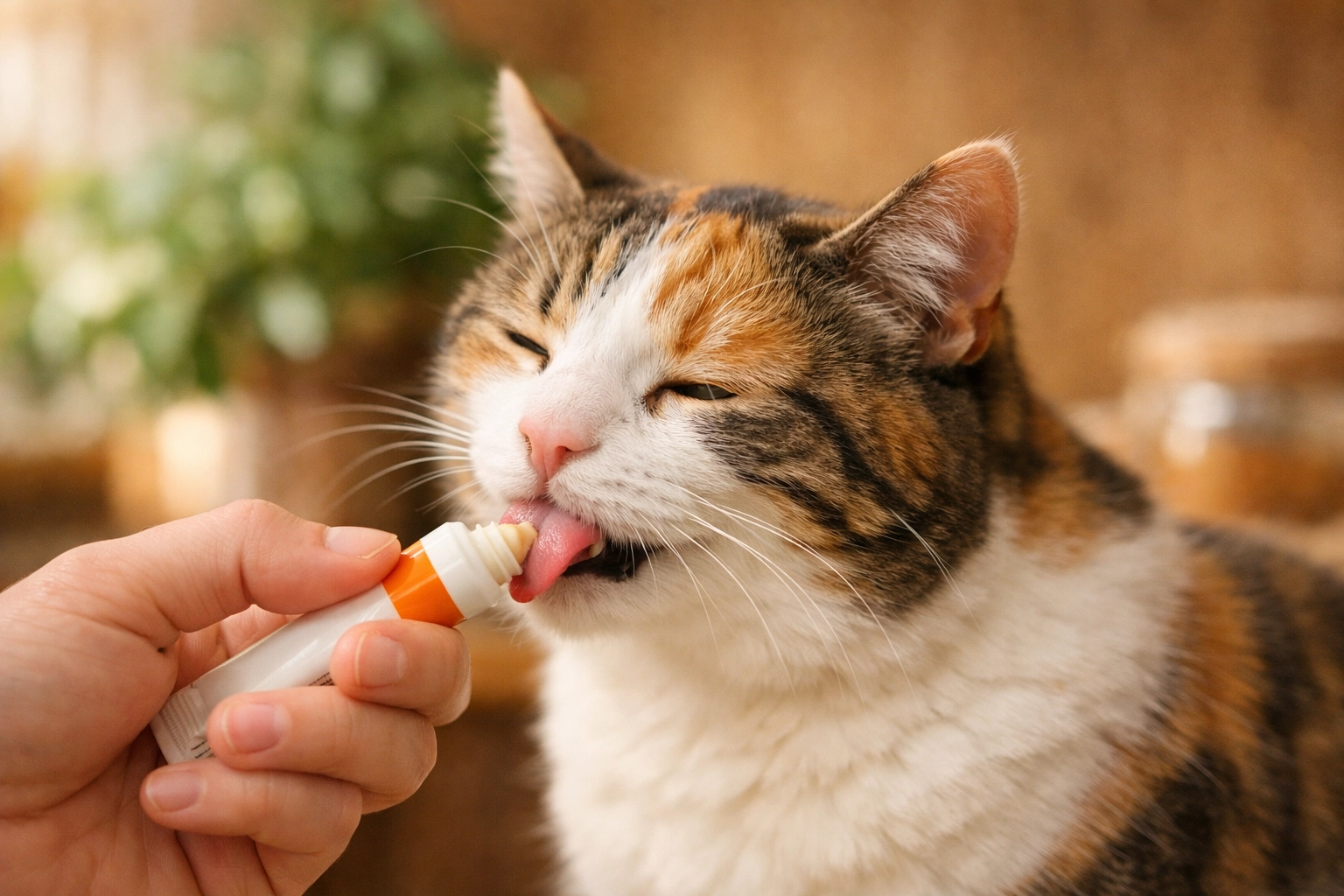
Stress management is a vital part of caring for a cat with a cardiac condition.
Conclusion: The Importance of Proactive Care
While we cannot "cure" most forms of feline heart disease, we can manage the symptoms, improve quality of life, and significantly delay the onset of heart failure. The key is early detection.
Because cats are so skilled at hiding their symptoms, your observations at home combined with our clinical expertise are the best defence. If you haven't had your cat's heart checked recently, or if you've noticed subtle changes in their behaviour, we invite you to request an appointment.
Your cat deserves a long, happy life, and we are here to help protect every beat of their heart.


Carrot puns are a crunchy way to add laughter to any conversation. Their clever vegetable-themed wordplay makes them perfect for social media captions, greeting cards, and friendly chats. Whether you enjoy gardening or simply love a good joke, carrot puns bring fresh humor that leaves everyone smiling from root to tip.
https://catpunsjokez.com/carrot-puns/